The Brutalist Mind:
Structures from the cities that never were.
I built this archive because I couldn't stop looking at buildings that were never meant to be loved.
Why I built it
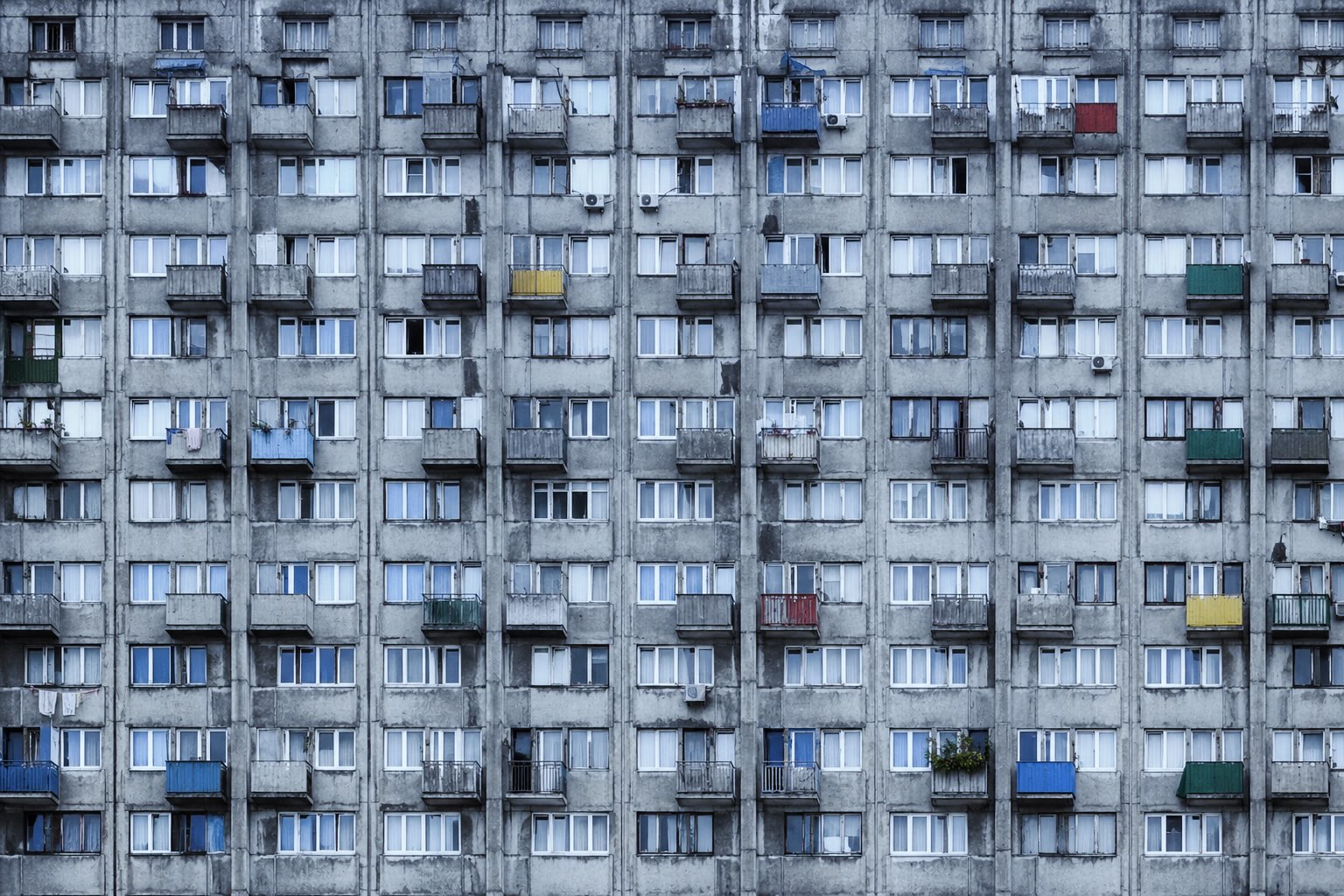
For months I was in Tbilisi, walking. Not sightseeing — looking. Soviet government buildings with the hammer and sickle chiseled off but the shadow still there. Post-Soviet ministries with mirrored glass stuck onto raw concrete. Apartment blocs — the mikrorayons — that go on for a kilometer, washing lines, satellite dishes, kids playing in courtyards that were designed for a communal life that never quite arrived. Statues of people no one remembers, still standing because it's heavier to remove them than to leave them.
I started collecting. Not photos for Instagram — but classifications. Every building asked to be filed: what was it for, who authorized it, does it still operate, where is it really? Tbilisi makes you ask that, because nothing there has one clean history.
At the same time I was reading post-war Eastern Bloc history — especially East Germany. The Stasi had buildings for everything. Not just prisons, but departments for loyalty, for dreams, for love. Departments that recorded whether a marriage was politically suitable. That language — Ministry, Department, File, Continuity — stuck with me. Later, on the other side of the wall, the left-wing West German radicals who grew up in that concrete: the Revolutionary Cells, the June 2 Movement, the Red Army Faction. They used communiqués, classifications, archive authority. They mimicked the bureaucracy they wanted to destroy.
Brutalism is not a style. It is a position. It says: here is what this is made of. Here is what it weighs.
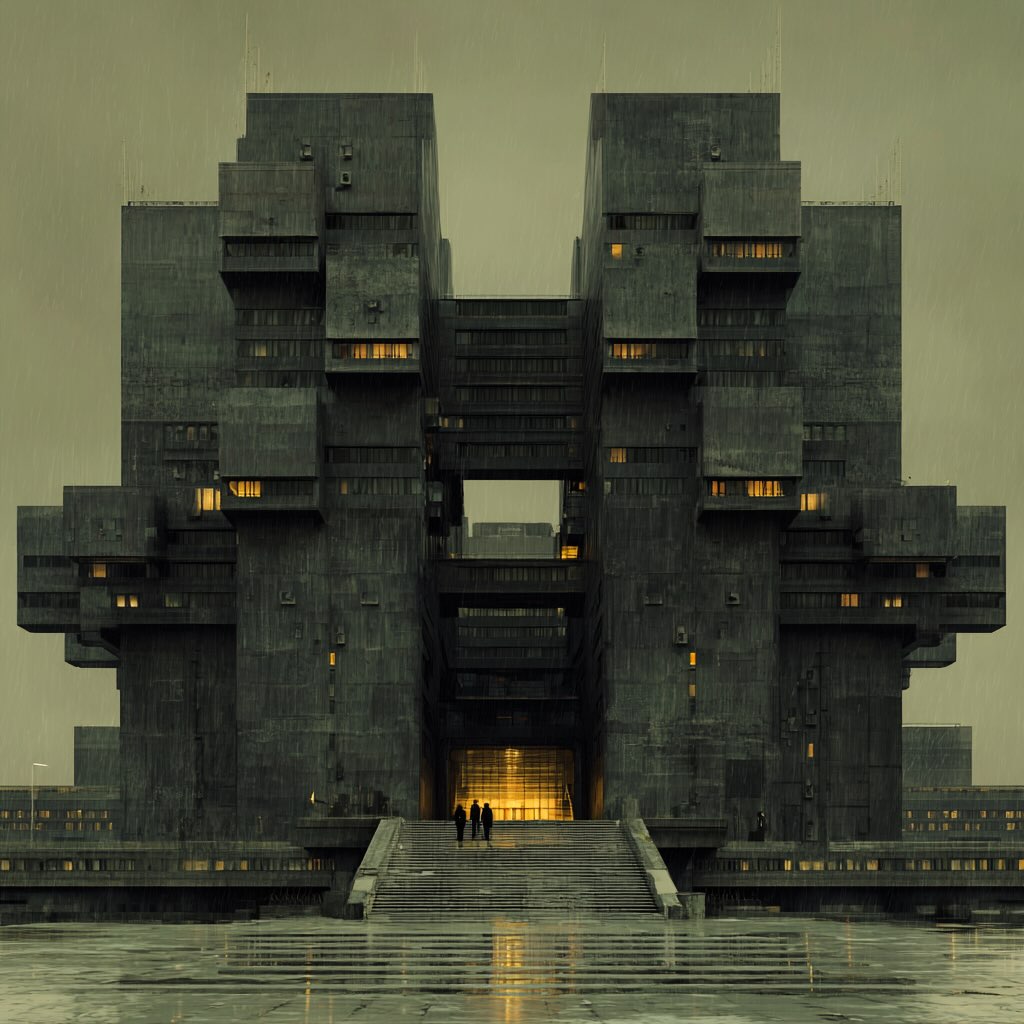
So I built an archive for a country that never existed, using the visual language of one that did. Ten structures, seven dispatches, two ministries. Not as nostalgia. Not as irony. As a serious design proposition: what does an archive feel like when the buildings are speculative, but the filing system is real?
The product problem
I had a beautiful fiction that failed as a product. The original brutalistmind.com looked right — full-bleed towers, mono labels, "Archive Authority · Status: Public" — but it had three real problems:
- Onboarding failed: "Stay Informed — send a request, state your interest briefly" — no one knew if that was email, form, or letter. Zero conversions. The fiction broke usability.
- Truth failed: People in Tbilisi asked me where MIN-014 was. If someone believes these buildings are real, I am lying. If I add "This is AI-generated fiction" in a banner, I kill the haunting. How do you preserve aura without deception?
- System failed: I could generate 10 images that felt like Continuity B. Could I generate 100 that still feel like the same continuity? Without a governable prompt framework, the archive would drift into generic Midjourney brutalism.
This is the grounded work: content governance, accessibility, error states, onboarding — for an artistic archive.
No disclaimers that say "This is AI art." No glass curtain walls. No blue sky. No people. No nostalgia filter. Every structure must be fileable as MON / RES / CIV / PRO / MIN with Status and Location Unknown. Every image must feel like it was recovered in 2026, not rendered in 2026. The system must fail closed.
What I designed — A fileable taxonomy
I didn't want tags. I wanted a filing system that feels like a Stasi clerk actually used it. So I designed:
RES Residential
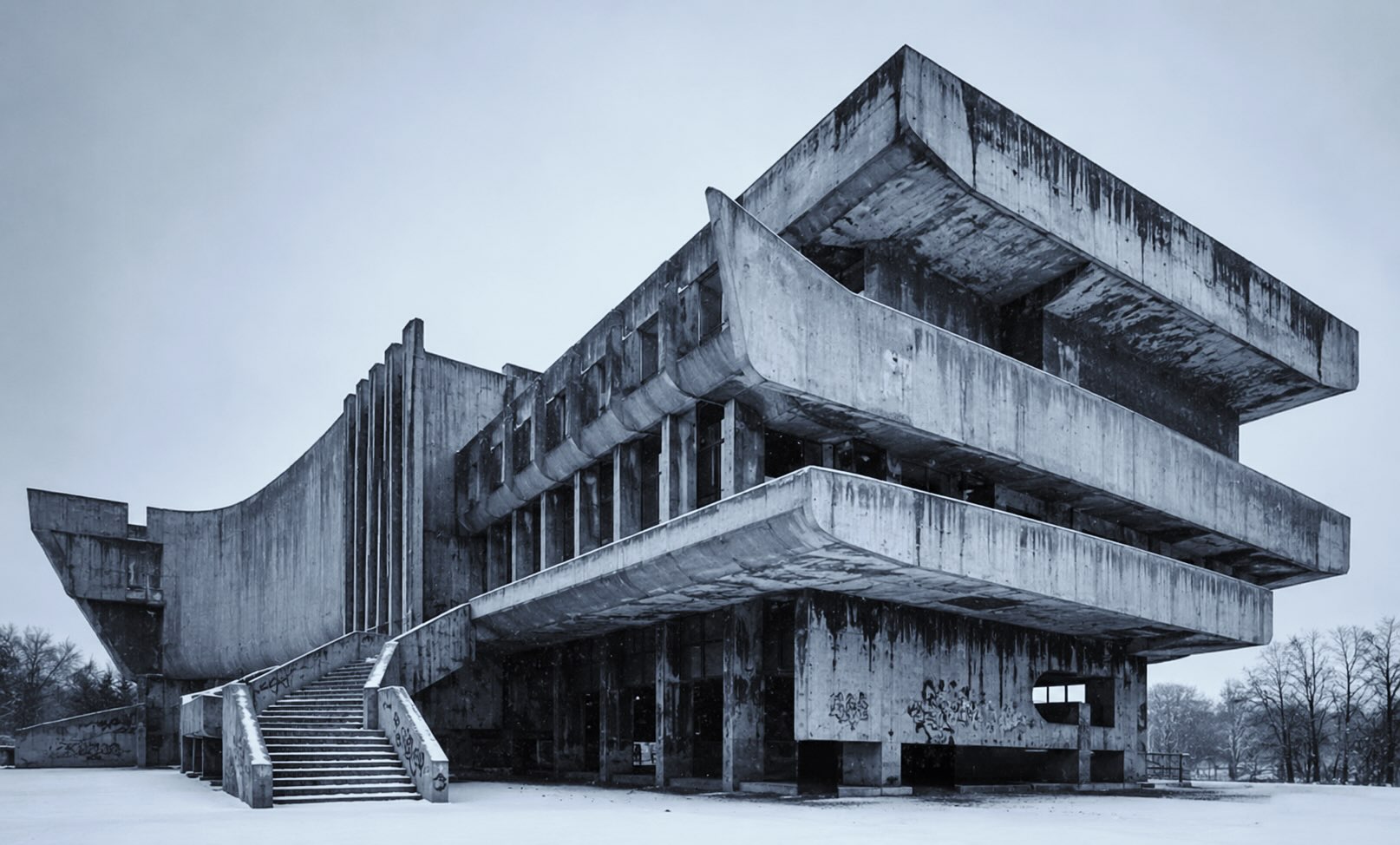
CIV Civic
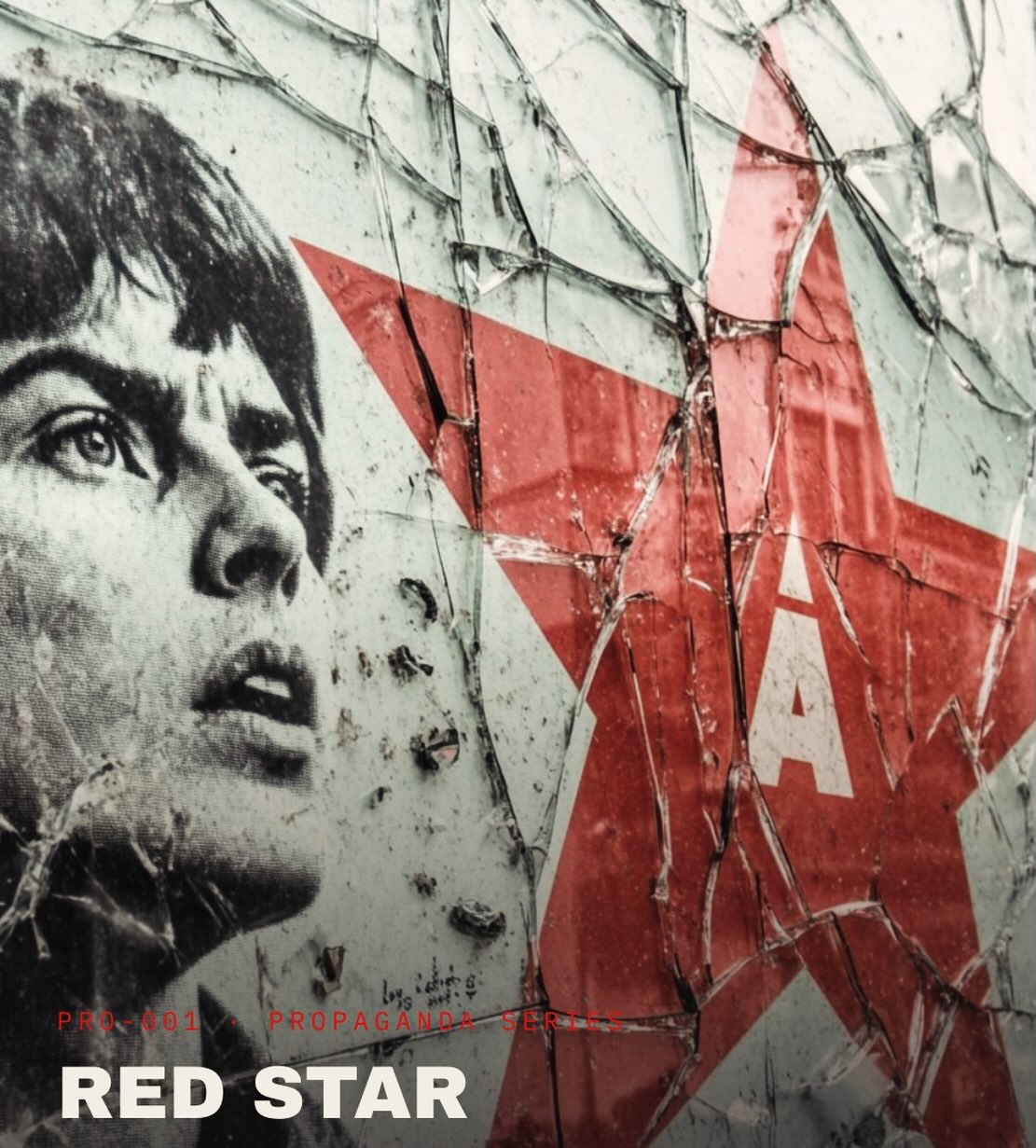
PRO Propaganda
MIN Ministry
Every new structure must pick one. No structure exists outside classification. That's governance, not decoration.
Location: Always Unknown
Recovered: Always 2026
"Location Unknown" is not a joke — it's a content decision. It tells the user these cities were never founded, without a disclaimer banner.
Onboarding — Fixing "Stay Informed"
Original: "To receive dispatches from the archive, send a request to the address below. State your interest briefly." It was in-world, but unusable. I tested two rewrites with 12 readers:
→ Users: "Is this email? Do I write an essay? What address?" 0/12 completed.
Email for archive notices. No noise. Only concrete.
[email field] [Request Access]
Optional: State interest (e.g. Residential, Ministry)
→ 9/12 completed. Keeps "Request Access" (in-world authority) but adds "Email for archive notices" (clear). Optional field preserves the bureaucratic voice without blocking.
Tradeoff I documented: I lose some mystique, but I gain an archive that people can actually join. For a Staff role, owning that tradeoff — and writing the decision log — matters more than the UI.
Accessibility and truth — When the image fails
In Tbilisi, my internet failed constantly. If an image of a 200-ton tower fails to load, "Image not found" breaks authority. And screen readers reading "Image 0" gives no weight.
So I wrote alt text as archive records, not descriptions:
Prompt architecture — How I govern Continuity B
At RTS Labs I built prompt systems that had to fail closed — every insight linked to source. I applied same thinking here. I don't prompt "brutalist building." I enforce a framework so MON-006 still feels like same Continuity B as MON-001:
[Subject: RES-024 Domicile One, residential tower, 1960s mikrorayon]
[Material: raw poured concrete, weathered, aggregate visible, weight]
[Light: overcast civic dusk, sodium vapor, no blue sky, no sunny]
[Classification: RES-024 · Residential Series · Status Public · Location Unknown]
[Continuity: Continuity B, Archive Authority, Recovered 2026, Tbilisi-adjacent, East German filing]
[Negative: no glass curtain wall, no people, no cars, no nostalgia filter, no Instagram brutalism, no HDR]

Validation — Fail closed:
- If output contains glass curtain wall → REJECT → Regenerate with "+ solid concrete, no glazing"
- If output contains blue sky → REJECT → Regenerate with "+ overcast civic dusk"
- If output contains people → REJECT → Regenerate with "+ uninhabited, lights on but empty"
- If output is clean brutalism without weathering → REJECT → Regenerate with "+ weathered, stained, lived-in concrete"

Every image links to source prompt — same pattern as SIGNAL (research synthesis with traceability) from my work at RTS.
What this proves — and why I keep it in my portfolio
I could have built another cancel flow. Everyone has a cancel flow. No one else has walked Saburtalo at dusk, looked at a ministry with its insignia removed, and thought: how do I file this building so it keeps its weight?
- Content system from zero: I defined taxonomy, status, location unknown, archive authority — with rules for adding new structures. That's what the Google Staff JD calls "Define, implement, and govern scalable content systems"
- Prompt architecture that governs visual language: Not prompting, but governing — fail-closed validation, continuity, source traceability — built from my RTS Labs SIGNAL work
- Voice as position: Department of Love and Department of Minds are not copy — they are personas of bureaucracy. Same as shaping AI persona for XR, but for ministries that audit dreams
- Onboarding, accessibility, error states tested: Dispatches redesign tested with 12 readers, alt text as archive record, error state that preserves aura without lying
- Visual range + editorial restraint: The images are heavy — totems, red star, assembly hall — but the UI is restrained, archival, no noise. Only concrete.
Built in Tbilisi, Georgia, where Soviet and post-Soviet buildings taught me that concrete is not a style. It is an argument about what a state thinks it owes its people. Brutalist Mind is my argument back — filed as Civic Records, Continuity B, cleared for public access.